Design Principles
Creating public services that are inclusive, effective, and built for everyone
Design is more than how a service looks — it’s how well it works for the people who use it. As Cambodia continues its digital transformation, we must ensure that every public service is simple, accessible, and meets real needs — especially for those who need them most.
These principles offer a clear, actionable framework for designing digital government services. They are inspired by proven practices from countries like the UK, Canada, and Australia, and adapted for Cambodia’s social, economic, and technological context.
Whether you're a designer, developer, policymaker, or product lead, these principles will help you build services that are:
- User-centered – based on real needs, not assumptions
- Inclusive – accessible to all citizens, regardless of ability or background
- Reliable – secure, responsive, and easy to use on any device
- Sustainable – scalable and mindful of long-term impact
By applying these principles, Cambodia can deliver digital services that people trust, use, and benefit from — today and into the future.
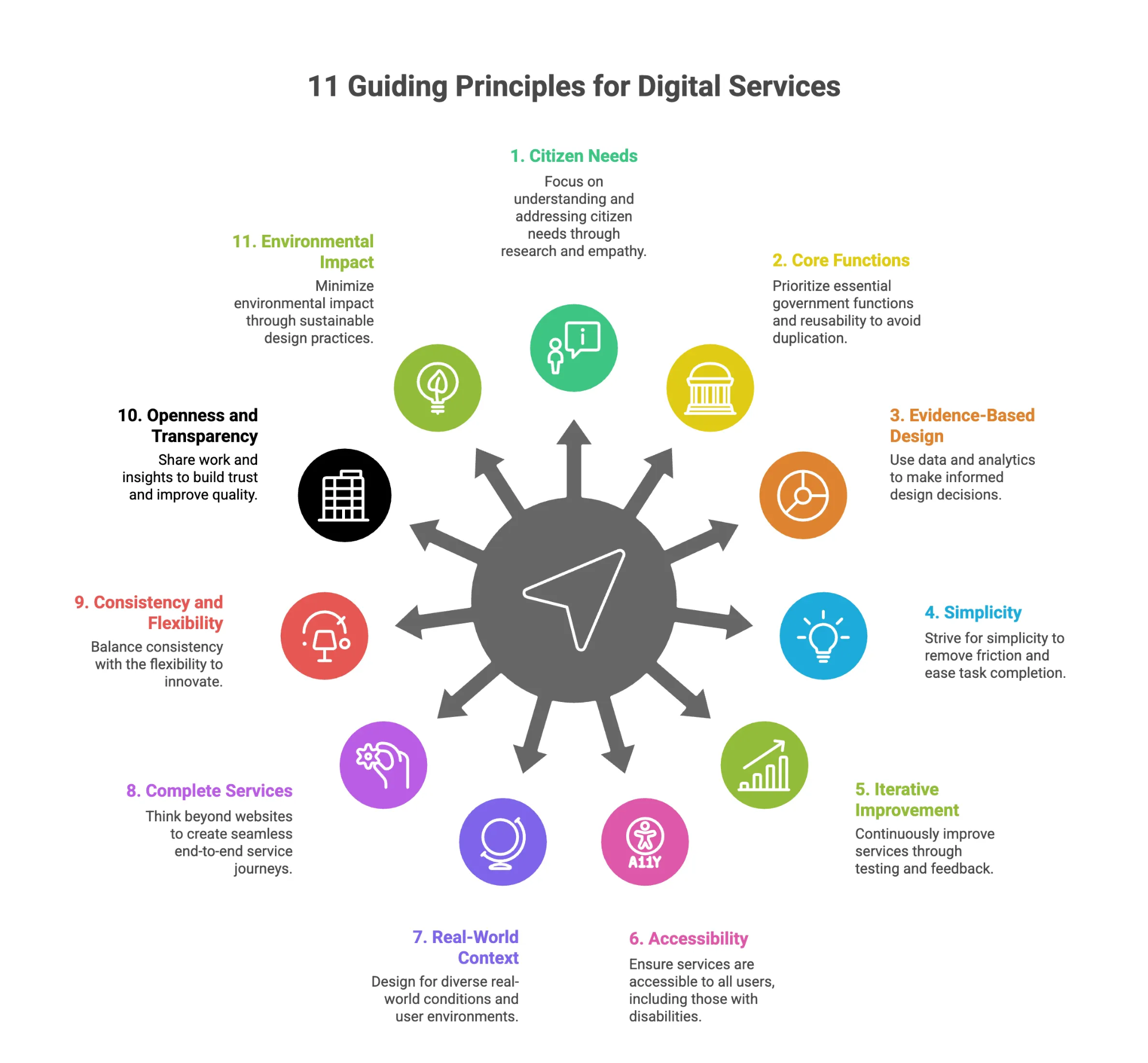
1. Start with Citizen Needs
Digital services must begin with a deep understanding of what citizens truly need. This means conducting user research, analyzing data, and engaging directly with real users — not relying on assumptions or requests alone. Remember: what people ask for may not reflect their actual problems. Design with empathy, and always put the public first.
2. Focus on Core Government Functions and Reusability
The government should focus on delivering the essential services that only it can provide — and make those services reusable across ministries and agencies. Don’t build the same thing twice. Instead, invest in platforms, data registers, and APIs that others can build on. Reuse what works to save time and taxpayer resources.
3. Design with Evidence and Data
Decisions should be grounded in real evidence — not intuition. Use analytics, feedback, and usage patterns to improve services continuously. Prototypes should be tested early with users, and improved iteratively based on measurable results. Data is not optional — it's a core design asset.
4. Make Things Simple to Use
Designing simple experiences for complex systems is hard — but essential. Simplicity means more than just a clean layout: it means making things intuitive, efficient, and easy to complete. Don’t accept “That’s how it’s always been done” as a reason for complexity. Push for clarity at every level.
5. Build, Test, and Improve Iteratively
Start small, release early, and learn fast. Build minimum viable products, test them with real users, and improve over time. Avoid large, risky launches by iterating through alpha, beta, and live phases. If something doesn’t work, don’t be afraid to rethink and rebuild.
6. Design for Accessibility and Inclusion
Accessible design is better design — for everyone. Services must work for people with disabilities, older users, rural residents with slow internet, and those using mobile devices or speaking different languages. If you must choose between elegance and usability, choose usability. Accessibility should be considered from the very beginning.
7. Understand the Contexts of People’s Lives
Cambodian citizens access digital services in many different settings: at work, in libraries, on smartphones, or with limited digital experience. Design for real-world situations — not just ideal conditions. Consider bandwidth, device types, language, and literacy.
8. Design Complete Services
Think about the full journey: from awareness and application to support and feedback. Help citizens complete tasks from start to finish. Great digital services link online steps with offline processes — and deliver real-world results.
9. Use Consistent Patterns, But Stay Flexible
Consistency builds trust. Use common layouts, buttons, and language where possible to make services easier to learn. But don’t let standardization block innovation. When new or better patterns emerge, document and share them. Design should evolve with user needs.
10. Work Openly and Transparently
Openness improves quality and builds public trust. Share your work, code, lessons, and even your failures with others — inside and outside government. Collaborate across teams, departments, and countries. Most digital services are built on open-source tools — let’s give back.
11. Minimize Environmental Impact
Digital services consume energy and resources. We must design sustainably — optimizing performance, reducing unnecessary data transfer, and minimizing carbon footprints. Even small changes can help reduce climate impact and protect Cambodia’s environment.
Final Note
These principles guide the design of public services that are not only functional — but inclusive, ethical, and resilient. By following them, Cambodia’s digital teams can deliver solutions that meet people’s real needs, build trust in government, and contribute to a better future for all.