Agile Methodology
In today’s rapidly evolving digital landscape, software needs to be flexible, user-centered, and fast to deliver. Agile development has emerged as the go-to approach to meet these demands — not just for startups, but for governments, enterprises, and non-profits alike.
What is Agile Development?
Agile is an iterative and incremental approach to software development that emphasizes:
- Delivering small pieces of working software early and often
- Continuous feedback from users and stakeholders
- Collaboration across cross-functional teams
- Responding to change over rigid adherence to plans
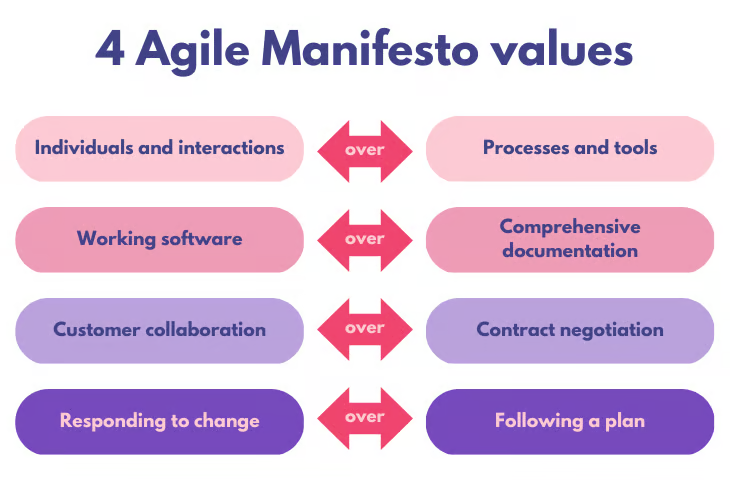
Agile development is rooted in the principles outlined in the Agile Manifesto (2001), which promotes values such as:
- Individuals and interactions over processes and tools
- Working software over comprehensive documentation
- Customer collaboration over contract negotiation
- Responding to change over following a plan
Unlike traditional approaches that wait until the end of a project to deliver a full product, Agile encourages early releases and continuous iteration to ensure what’s being built truly meets user needs.
Popular frameworks under Agile include:
Scrum
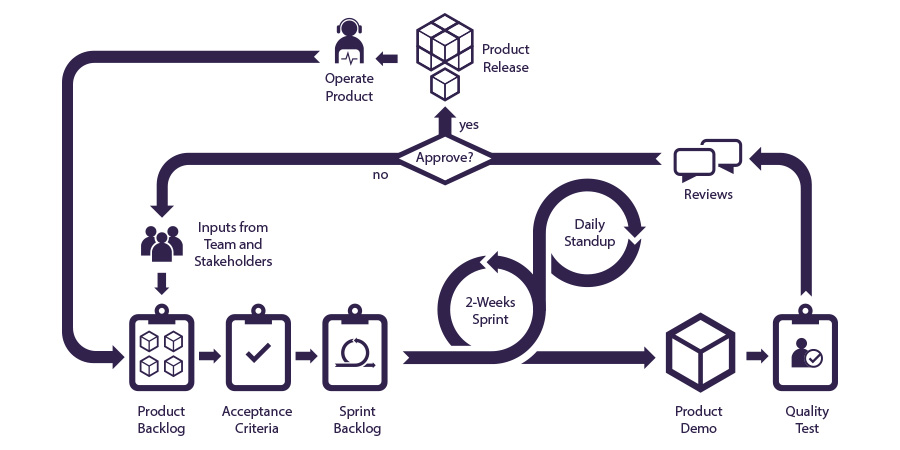
Scrum is the most popular Agile framework, offering a structured approach with defined roles, time-boxed sprints, and ceremonies such as Sprint Planning, Daily Stand-ups, and Retrospectives.
Key features:
- Roles: Scrum Master, Product Owner, Development Team
- Work is delivered in sprints (typically 1–4 weeks)
- Emphasis on team accountability, velocity, and continuous improvement
Scrum works particularly well in structured organizations transitioning from traditional methods to Agile.
The 3-5-3 of Scrum
Scrum follows the Scrum 3-5-3 model, which defines three roles, five events, and three artifacts. These elements work together to create a repeatable, transparent, and collaborative workflow. The three roles are:
- Product Owner: responsibles for defining Stories and prioritizing the Team Backlog items according to their value.
- Scrum Master: ensures the team is following the proper Scrum structure
- Development Team: consists of cross-functional members in the Scrum Team that are committed to creating any aspect of a usable increment each sprint.
Scrum organizes work into time-boxed sprints, usually 1–4 weeks long. Each sprint provides a stable period for teams to plan, build, and deliver a usable piece of the product. The five Scrum events are:
- Sprint: the heartbeat of Scrum, where ideas are turned into value.
- Sprint Planning: initiates the Sprint by laying out the work to be performed for the Sprint. This resulting plan is created by the collaborative work of the entire Scrum Team.
- Daily Scrum: inspect progress towards the Sprint Goal and adapt the Sprint Backlog as necessary. To inspect progress towards the Sprint Goal and adapt the Sprint Backlog as necessary. To consider discussing the following:
- Work that has been done the day before
- Work that is planned today
- Blockers (if any)
- Sprint Review: inspect the outcome of the Sprint and determine future adaptations.
- Sprint Retrospective: plan ways to increase quality and effectiveness.
To maintain transparency and shared understanding, Scrum uses three key artifacts: the Product Backlog, Sprint Backlog, and the Increment.
- Product Backlog: an emergent, ordered list of what is needed to improve the product. It is the single source of work undertaken by the Scrum Team.
- Sprint Backlog: a highly visible, real-time picture of the work that developers plan to accomplish during the Sprint in order to achieve the Sprint Goal.
- Increment: a concrete stepping stone towards the Product Goal.
These artifacts help teams visualize what needs to be done, what they are currently committed to, and what they have completed. Scrum also relies on simple metrics such as velocity and burn-down charts to help teams understand their capacity and make realistic future plans. By breaking work into clear goals, encouraging frequent feedback, and supporting steady improvement, Scrum helps teams reduce risk, respond quickly to change, and build higher-quality products. Because of its balance of structure and adaptability, Scrum works especially well for organizations transitioning from traditional project management models, giving them a dependable path toward Agile maturity.
Tracking Sprint Progress
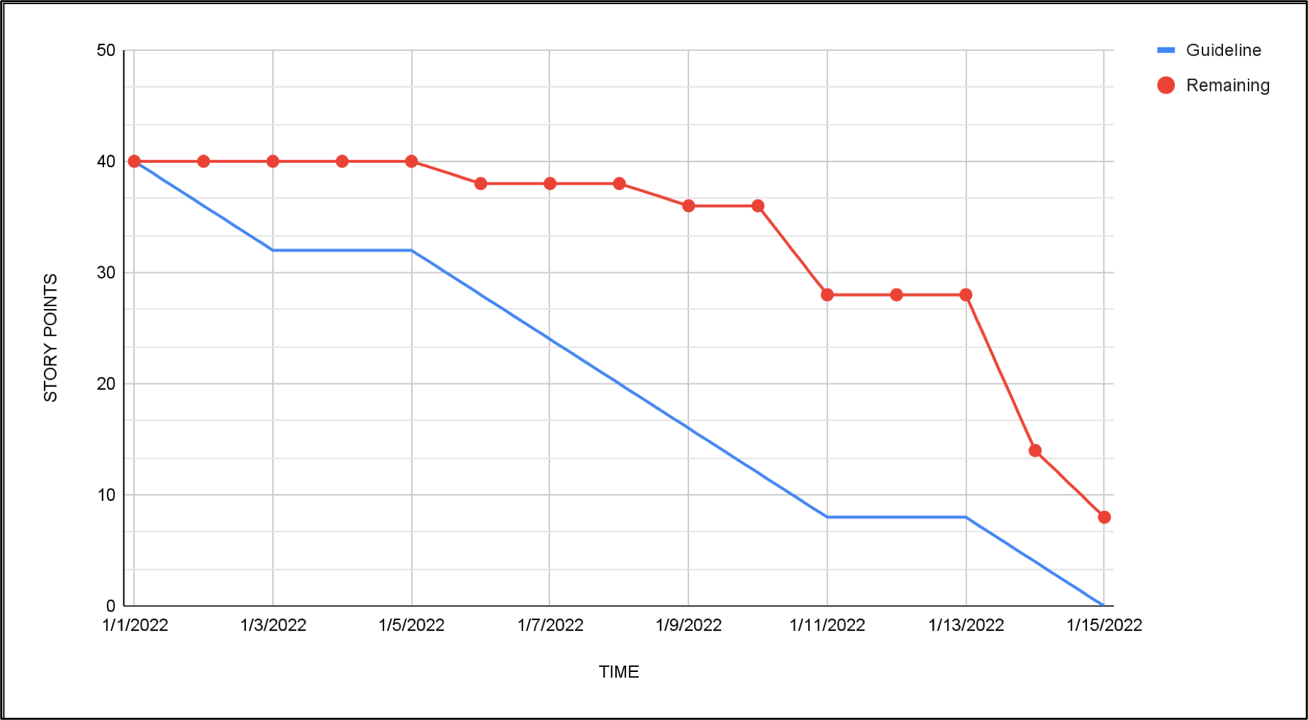
A Sprint Burn-down Chart is a visual tool used to monitor the progress of tasks during a sprint. It allows the Scrum Team to see how much work remains and assess whether they are on track to complete all planned tasks within the sprint timeframe.
The chart usually displays time in days along the x-axis, representing the sprint’s duration, while the y-axis shows the total amount of work remaining. An ideal progress line is included to indicate the expected pace of task completion throughout the sprint.
As the sprint progresses, the team updates the chart daily to reflect the actual remaining work, allowing them to compare it against the ideal trajectory. This continuous tracking helps the team quickly identify whether they are ahead, behind, or on schedule, providing transparency and enabling timely adjustments to ensure the sprint goals are met.
Kanban
Kanban focuses on visualizing workflow, limiting work in progress (WIP), and optimizing flow. A fast and smooth flow of work means you can deliver value quickly and predictably and get early feedback to find out whether your product or service is meeting user needs.
Key features:
- Visual board with cards representing tasks in columns like “To Do,” “In Progress,” and “Done”
- Continuous delivery (no fixed-length sprints)
- Emphasizes flow efficiency, cycle time, and bottleneck identification
Kanban is ideal for teams handling ongoing or unpredictable work, such as operations, support, or content development.
Key Concepts
-
Visual Workflow: Work items are represented on a Kanban board, usually with columns such as To Do, In Progress, Review, and Done. This visualization helps the team see the current status of all tasks at a glance and quickly identify bottlenecks.
-
Work In Progress (WIP) Limits: Kanban sets limits on the number of tasks that can be in progress at each stage. By restricting WIP, teams avoid overloading members, maintain focus, and improve flow.
-
Continuous Flow: Work items are pulled into the next stage only when there is capacity, rather than being assigned in advance or forced into a sprint. This ensures smooth, steady progress and faster throughput.
-
Lead Time and Cycle Time: Kanban tracks how long tasks take to move through the workflow. Monitoring these metrics helps the team identify delays, optimize processes, and improve predictability.
-
Continuous Improvement: Kanban encourages regular review of workflow efficiency. Teams can experiment with process changes, adjust WIP limits, or reorganize board stages to optimize delivery.
Lean
Lean software development, like Kanban, is adapted from lean manufacturing principles like the Toyota Production System.
The principles of Lean aim to help your team focus on:
- reducing waste
- delivering quickly
- learning and improving
- using evidence and data to make decisions
Read the following to learn more about Lean:
Waterfall vs. Agile
Waterfall and Agile approaches differ significantly in how they handle planning throughout the project lifecycle. In traditional waterfall projects, detailed planning is done upfront, before development begins. Once plans are established, they are typically fixed, and changes are rare or discouraged.
Waterfall is sequential and predictive — all planning is done upfront, followed by design, development, testing, and release. Their key characteristics are:
- Detailed requirements defined early
- Change is costly and discouraged
- Plans are documented in static artifacts (e.g., Gantt charts)
- Visibility is often limited to project managers and stakeholders
Once the plan is in motion, it rarely changes, which can result in misalignment with user needs by the time the product is released.
In contrast, Agile projects embrace adaptive planning. Agile promotes adaptive planning that evolves with the project:
- Plan at the right level at the right time
- High-level planning for future work, detailed planning for immediate tasks
- Plans are living documents, refined through feedback
- Emphasis on transparency and collaboration
Practices include:
- Maintaining a visible product backlog
- Using team walls or digital tools to show goals, roadmap, and user stories
- Involving the whole team in planning and estimation
- Making planning artifacts accessible across the organization
By encouraging flexibility, Agile planning ensures the team stays aligned with changing needs and delivers the most valuable features first.
When Should You Use Agile?
Agile is particularly well-suited for:
- Projects with evolving or unclear requirements
- Products that need regular updates or user feedback
- Teams that need flexibility and rapid delivery cycles
- Environments where collaboration and learning are valued
Agile may not be ideal for:
- Projects with rigid regulatory or fixed-scope contracts (unless Agile contracts are adopted)
- Teams unprepared to embrace continuous collaboration or self-organization.
Agile development is more than just a way of working — it’s a mindset that embraces learning, flexibility, and delivering value to users. Whether you adopt Scrum, Kanban, Lean, or a hybrid approach, the core goal remains the same: build the right thing, and build it well.